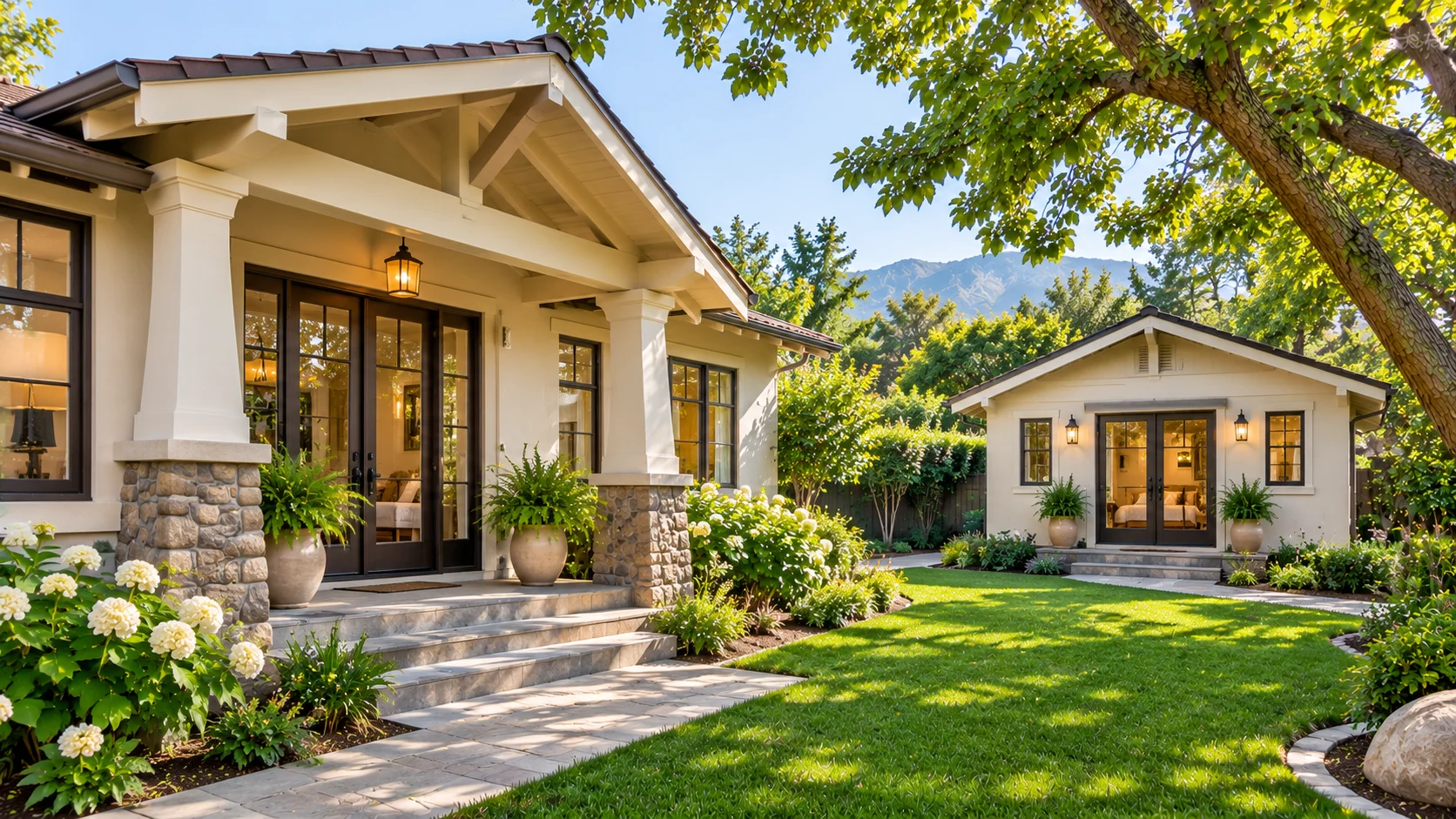
An accessory dwelling unit, commonly called an ADU, can provide additional living space on a residential property. For buyers considering Arcadia homes with ADUs, this type of property may offer flexibility for extended household arrangements, guests, or other potential uses.
However, not every additional structure is a legally recognized ADU. A converted garage, detached building, or finished room should not automatically be treated as an approved separate dwelling. Buyers need to understand the unit’s status, condition, permitted use, utilities, and any applicable requirements before relying on it as part of their purchase decision.
An ADU can also affect the way a property is maintained and used. Buyers should evaluate the main home and the additional unit as parts of one overall property, considering both the benefits and the responsibilities.
Nick and Katie Manes of The Manes Team work with buyers and sellers in Arcadia, Pasadena, Sierra Madre, and the San Gabriel Valley. Their local real estate experience can help buyers evaluate listings, organize property questions, and navigate the purchase process.
This guide explains what buyers should understand when considering an Arcadia home with an ADU.
Understanding ADUs and Additional Living Spaces
Before evaluating a property, it is important to understand what an ADU is and how it differs from other types of additional space.
What Is an Accessory Dwelling Unit?
An ADU is a secondary residential unit located on the same lot as a primary residence. It is generally designed to provide independent living accommodations.
Depending on the design and applicable requirements, an ADU may include living, sleeping, cooking, and bathroom facilities.
ADUs can take different forms, including:
- A detached unit separate from the main home.
- An attached unit connected to the primary residence.
- A conversion of an existing structure, such as a garage.
- A unit created within the existing home, depending on its configuration and applicable rules.
The specific definition and requirements are governed by applicable state and local regulations.
ADU vs. Guest House vs. Converted Space
Marketing descriptions may use terms such as guest house, studio, bonus room, or additional living quarters. These labels do not necessarily establish that a structure is a permitted ADU.
A guest room may lack independent facilities. A finished garage may not be approved for residential occupancy. A detached structure may have limitations on its legal use.
Buyers should verify the actual status of the space through permits, property records, and the relevant building department.
Why Buyers Consider Homes With ADUs
An additional dwelling unit may provide flexibility for different household needs.
Potential uses may include:
- Housing an extended family member.
- Providing space for guests.
- Supporting a household member who wants more independence.
- Creating a separate work or creative environment, where permitted.
- Exploring potential rental use, subject to applicable rules.
The appropriate use depends on the unit’s legal status, design, condition, and applicable regulations.
ADU Features Can Vary
Not all ADUs offer the same features or level of independence.
Some may have a full kitchen and bathroom, while others may have a different arrangement. Access, privacy, utility connections, storage, and outdoor space can also differ.
When touring a property, evaluate the actual unit rather than relying on the general description in the listing.
Permits, Legal Status, and Property Due Diligence
One of the most important parts of buying a property with an ADU is confirming that the additional space has the appropriate approvals and can be used as intended.
Verify Permits and Approvals
Ask the seller for available permits, plans, inspection records, and other documentation related to the unit.
If documentation is incomplete, contact the appropriate City of Arcadia department to investigate the property’s records and requirements.
Do not assume that a structure is legal because it has been used as living space for many years or because it appears finished.
Confirm the Unit’s Approved Use
A buyer may want to use an ADU for a family member or rental purposes. Before relying on that plan, verify the unit’s permitted use and any applicable restrictions.
Questions may include:
- Is the unit recognized as an ADU?
- Was the construction approved?
- Are the current facilities consistent with the approved plans?
- Are there occupancy or use limitations?
- Are additional approvals needed for proposed changes?
The answers depend on the property and current regulations. Consult the relevant local authority and qualified professionals.
Review Construction and Renovation Records
If the ADU was recently built or remodeled, ask for available documentation.
This may include:
- Building permits.
- Approved plans.
- Contractor information.
- Inspection sign-offs.
- Warranties.
- Records of plumbing and electrical work.
- Documentation for heating and cooling systems.
These records can help buyers understand the work performed and identify questions that require follow-up.
Understand Zoning and Local Requirements
ADU regulations can involve state and local rules concerning construction, placement, size, access, parking, utilities, and other matters.
Requirements may change, and they can depend on the specific property.
For current information, consult the City of Arcadia and applicable California government resources. A qualified architect, contractor, or land-use professional may help assess a proposed project.
Investigate Property Boundaries and Access
If the ADU is detached, buyers should understand its location in relation to property lines, driveways, walkways, and neighboring structures.
Review available surveys and title information if boundaries or easements are relevant.
Do not assume that a visible fence, walkway, or driveway arrangement establishes the legal boundary or access rights.
Review Rental Rules Before Counting on Rental Income
Some buyers may be interested in renting an ADU. Rental possibilities depend on the unit’s legal status and applicable state and local requirements.
Before including potential rental income in your financial calculations, verify the permitted use and relevant restrictions.
Also consider insurance, maintenance, management, taxes, vacancy, and other costs. A potential rental use should not be treated as guaranteed income.
Evaluating the ADU’s Condition, Layout, and Practical Value
A permitted unit still needs to be evaluated for its physical condition and usefulness. Buyers should inspect the additional space with the same care as the main home.
Assess the Layout and Functionality
Consider whether the unit offers practical living arrangements for the intended use.
Look at:
- Sleeping and living areas.
- Kitchen or food preparation facilities.
- Bathroom configuration.
- Storage.
- Natural light and ventilation.
- Heating and cooling.
- Entry and access.
- Privacy from the main residence.
A small unit may work well for one purpose but be unsuitable for another. Think about who will use the space and what they will need.
Evaluate Privacy and Separation
Privacy can be important when the main house and ADU are occupied by different people.
Consider the location of entrances, windows, outdoor spaces, and shared walkways. Think about sound, parking, and how the two living areas interact.
If separate outdoor areas are important, verify whether they are part of the property and how they can be used.
Inspect Plumbing and Electrical Systems
The ADU’s plumbing and electrical systems should be reviewed by qualified professionals as appropriate.
Check the condition of fixtures, outlets, visible wiring, water heaters, drains, and other components. Ask whether the unit has separate utility meters or shared connections.
The arrangement can affect billing, maintenance, and future changes. Do not assume that a detached unit has independent utility services.
Review Heating, Cooling, and Ventilation
Comfort and ventilation are important parts of residential use.
Determine how the unit is heated and cooled and whether the systems appear to function properly. Ask for service records where available.
Bathrooms and cooking areas should also be evaluated for appropriate ventilation. A qualified professional can investigate concerns about equipment or installation.
Check the Roof, Foundation, and Exterior
A detached or attached ADU has its own building components that may need maintenance.
Review the roof, exterior walls, doors, windows, foundation, drainage, and visible signs of moisture.
If the structure is older or has undergone substantial conversion work, consider whether additional specialist inspections are appropriate.
Evaluate Parking and Access
Parking arrangements can affect how a property functions when the main home and ADU are occupied separately.
Review the available spaces, driveway access, pedestrian routes, and any shared arrangements.
Verify applicable parking requirements and do not assume that a space can be reserved for a particular use without checking the property’s legal and practical arrangements.
Buying an Arcadia Home With an ADU: Financial and Ownership Considerations
An ADU may add flexibility, but buyers should consider the complete financial and maintenance picture.
Compare the Purchase Price With the Overall Property
Consider the value of the main home and the additional unit together. Evaluate the unit’s condition, legal status, construction quality, and usefulness.
Do not assume that an ADU automatically adds a specific amount to a property’s value. The effect depends on the market, property, unit characteristics, and buyer demand.
A local comparative market analysis can provide context for how similar properties have been positioned and sold.
Budget for Maintenance of Both Structures
Owning an ADU means maintaining another residential space.
Potential costs may include:
- Roof and exterior maintenance.
- Plumbing and electrical repairs.
- Heating and cooling service.
- Appliance replacement.
- Cleaning and general upkeep.
- Landscaping.
- Shared driveway or access maintenance.
- Insurance.
The actual costs depend on the unit’s age, size, condition, and equipment.
Understand Insurance Coverage
Insurance coverage for a property with an ADU may require additional questions.
Discuss the main home and secondary unit with an insurance professional. Confirm how the policy treats the structure, its intended use, liability, and any rental arrangements.
Do not assume that coverage for the primary home automatically provides adequate protection for every ADU use.
Consider Taxes and Financing
Property tax and financing implications can depend on the property’s characteristics, the construction history, and applicable rules.
Discuss financing with your lender and tax questions with a qualified tax professional. Avoid relying on assumptions about how an ADU will affect loan qualification, property assessment, or tax treatment.
Think About Future Household Needs
A property with an ADU may be attractive because it can support different household arrangements over time.
However, future use should be considered alongside privacy, access, maintenance, and legal requirements.
Think about how the property would work if household needs change, while avoiding assumptions that a unit can be expanded or modified without approval.
Coordinate Inspections and Document Review
The main home and ADU should both be included in the due diligence process.
Depending on the property, buyers may need a general home inspection, specialist evaluations, permit research, insurance guidance, and a review of title or survey information.
Keep a list of unresolved questions and make sure they are addressed within the applicable transaction deadlines.
Frequently Asked Questions About Arcadia Homes With ADUs
1. What is an ADU in California?
An accessory dwelling unit is a secondary residential unit on a property with a primary residence. It is generally designed to provide independent living accommodations, subject to applicable state and local requirements.
2. Are ADUs legal in Arcadia?
ADUs may be allowed under applicable California and local regulations, but requirements depend on the property and proposed or existing unit. Buyers should verify the status of a specific unit with the City of Arcadia.
3. Can I rent out an ADU on an Arcadia property?
Rental use depends on the unit’s legal status and applicable rules. Verify permitted use, local requirements, and any relevant restrictions before relying on rental income.
4. How can I tell if an ADU was built with permits?
Request available permits, approved plans, and inspection records, and check the property’s records through the appropriate local building department. Do not rely solely on the seller’s description or the structure’s appearance.
5. Does an ADU increase a home’s value?
An ADU may affect buyer interest and property value, but the impact depends on the unit’s legal status, condition, design, usefulness, and current market conditions. A property-specific market analysis is more useful than assuming a fixed value increase.
Explore Arcadia Homes With Additional Living Space
A property with an ADU may offer useful flexibility, but buyers should confirm the unit’s legal status, condition, and suitability for their intended use. Careful document review and inspections can help clarify both the opportunities and responsibilities.
Contact Nick and Katie Manes of The Manes Team to discuss Arcadia homes with ADUs, evaluate property options, and plan your purchase.